


For many travelers, including my husband, food is a very important part of the journey and often influences the choice of where to go on holiday. Korean cuisine has become increasingly well known in recent years, especially among lovers of spicy food and fermented foods such as kimchi.
I, however, am not one of them!
Just like with my article on visiting Seoul, despite not being a huge fan of Korean food, here I am writing an article to help those of you planning a trip to this country.
Of course, this is not meant to be an exhaustive guide, but simply to introduce you to some of the most famous dishes and give you an idea of the foods you can expect to find in South Korea.
The culinary experience in Korea can essentially be divided into three parts: dishes eaten seated at a table, street food, and cafés. Café culture (and tea houses) is a serious matter in Korea, with countless lovely little places where you can sip carefully selected blends, medicinal teas, and elaborate desserts.
Dishes you shouldn’t miss
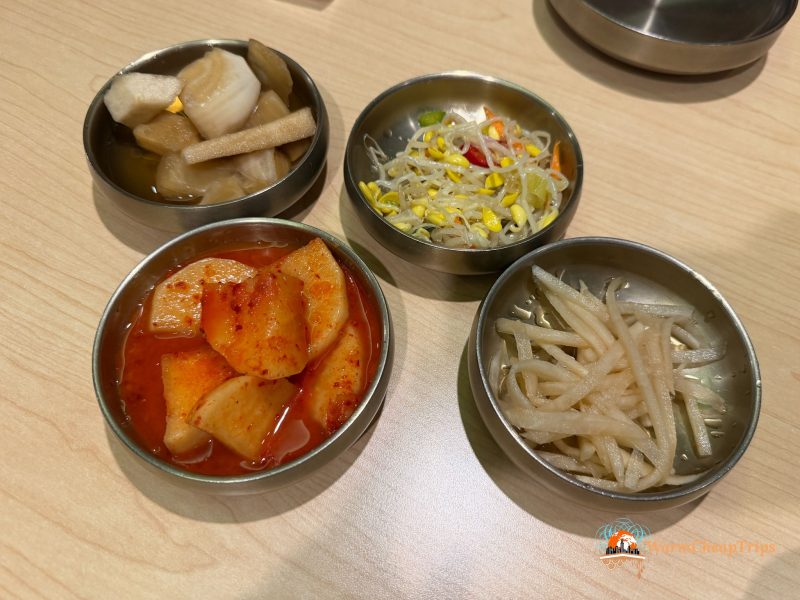
Koreans, just like the Japanese, absolutely love food, all the traditions behind it and the sharing of dishes. In fact, when you sit down at a Korean restaurant, you will almost always be served little side dishes to share: banchan.
These little dishes serve as side dishes/snacks throughout the meal. They are placed in the middle of the table and shared, included in the price, and you can often ask for more. They vary depending on the restaurant, but you will almost always get some kimchi, various types of pickles ranging from mild to spicy, soybean sprouts, tofu… They are not an appetizer, but are generally served alongside the entire meal, combining flavors and encouraging sharing, according to Korean tradition.
Another thing you will always find on Korean tables (and in Korean homes) is kimchi: fermented napa cabbage seasoned with chili powder. Kimchi is the symbol of Korean cuisine, and its traditional autumn preparation, known as Kimjang, is UNESCO Intangible Cultural Heritage and a true institution. Seoul even has a Kimchi Museum dedicated to its culture, history, and health benefits, as well as explaining to visitors how to make it.
Bibimbap
Bibimbap is probably the best-known Korean dish abroad: a bowl of rice topped with stir-fried vegetables, an egg (raw or fried, depending on the version), and beef, with everything mixed together before eating. It is often served in a piping-hot stone bowl that continues cooking the rice at the bottom while you eat.
Samgyeopsal & Korean BBQ
Samgyeopsal is pork belly grilled directly at the table on a hot plate built into the center of the table, and the experience of cooking it yourself while drinking your first glass of soju is definitely one of the things to do on a trip to Korea.
Once the meat is grilled, you wrap it in lettuce leaves together with roasted garlic, soybean paste, and rice.
At many restaurants, you can also order beef to cook on the grill, but traditionally the original version is made with pork.
Bossam
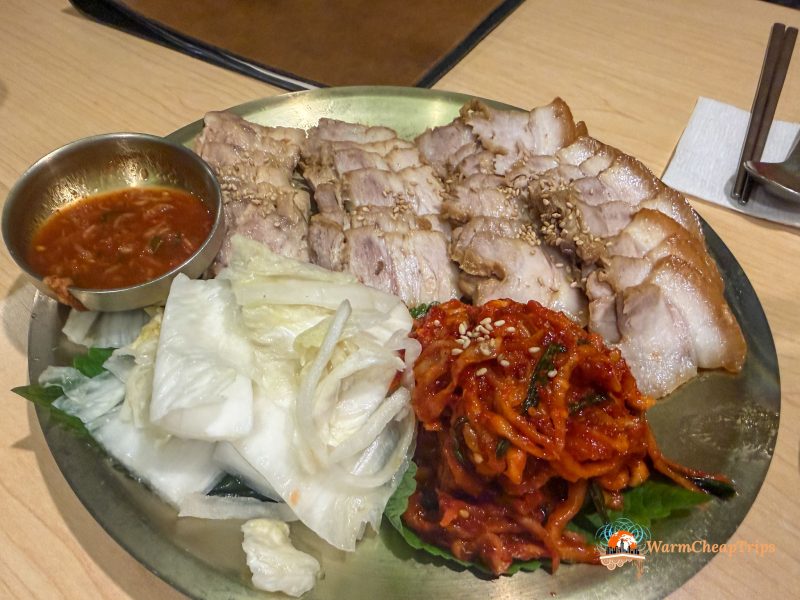
If you prefer your meat boiled rather than grilled, bossam is boiled pork, again eaten wrapped in lettuce. Since it isn’t spicy and doesn’t make your clothes smell because it arrives already cooked, it is one of the dishes I enjoyed eating most in Korea. A restaurant specializing in this dish that I recommend is Jungdamun Bukchon, located in a hanok converted into a restaurant in Bukchon Village.
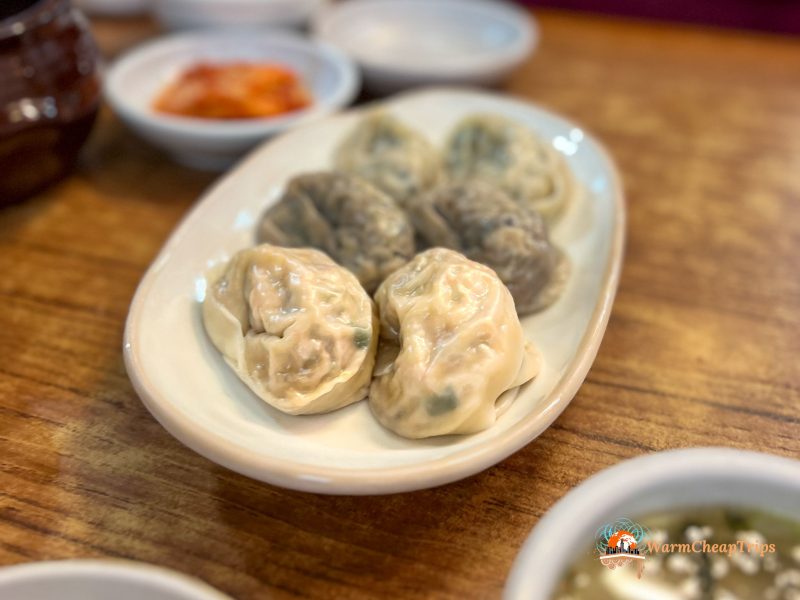
Mandu
Korean dumplings, and they’re huge, filled with pork, tofu, glass noodles, and vegetables, or with kimchi or just vegetables. They are generally steamed, but there are also versions served in broth or grilled, a specialty of Suwon.
A highly recommended place to try them is Gaesong Traditional Dumpling House in the Insadong area. It is a Michelin Bib Gourmand restaurant where reservations are not possible, so you have to queue (or, like us, get lucky and find a table for dinner by going early).
Here, the mandu follow the traditional recipe from Kaesong, the North Korean city closest to the border, because that is where the grandmother who arrived here from that city in 1970 came from, before opening this restaurant. Huge and delicious dumplings — I recommend ordering the mixed selection.
Jeonbokjuk, abalone porridge
On our second trip to Korea, we were traveling with my husband’s 84-year-old grandmother, so we tried one of Korea’s healthiest dishes: abalone porridge.
This delicate-tasting porridge, enriched by the nutritional properties of abalone, is traditionally eaten to give strength to elderly people, women who have just given birth and those who are sick. You can find it everywhere, but especially on Jeju Island, where abalone is one of the local specialties.
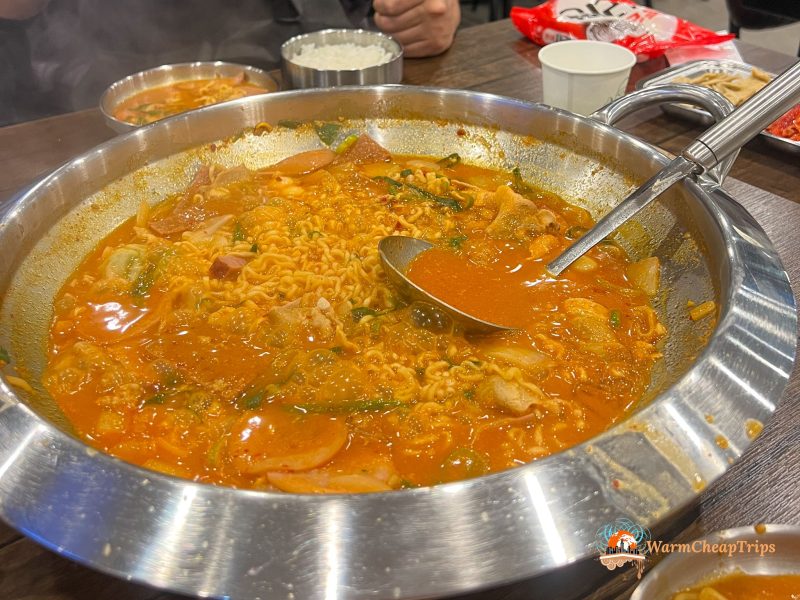
Budae jjigae
The name literally means “army stew” because this dish originated in post-war Korea, when the population was struggling and products coming out of US military bases, such as Spam and canned beans, were mixed with kimchi, tofu and noodles to create something hot and filling.
A dish born out of necessity and ingenuity, it eventually became one of Korea’s most beloved comfort foods, and you can still find it in many specialized restaurants. You can ask for cheese to be added to make it less spicy.
Kalguksu
These are handmade, hand-cut noodles served in a broth that varies depending on the region, but is generally chicken broth. The noodles are thick, irregular and slightly rough, absorbing the broth differently from any other type of Korean noodle.
In Seoul, the Namdaemun area has an entire little alley dedicated to kalguksu, with historic restaurants that have been serving nothing but this dish for decades. It is also an excellent comfort food to settle your stomach if you’ve overdone it with fried and spicy food.
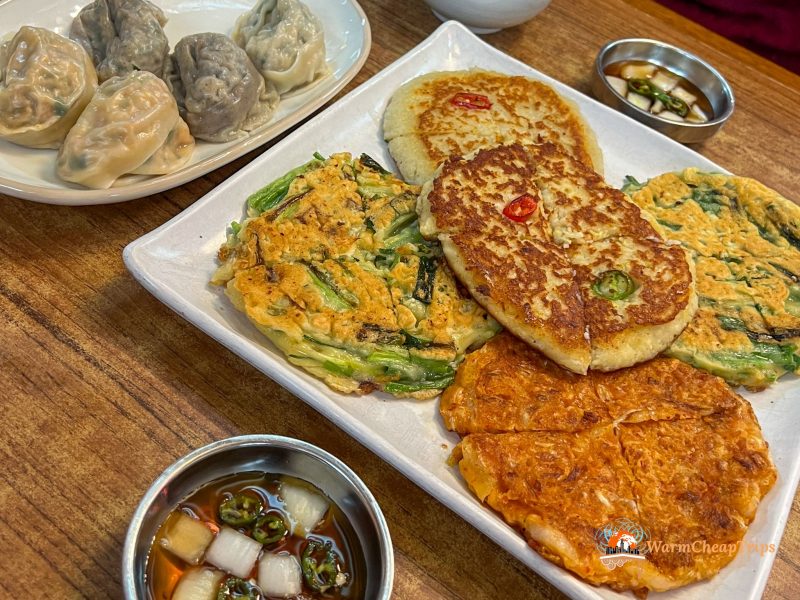
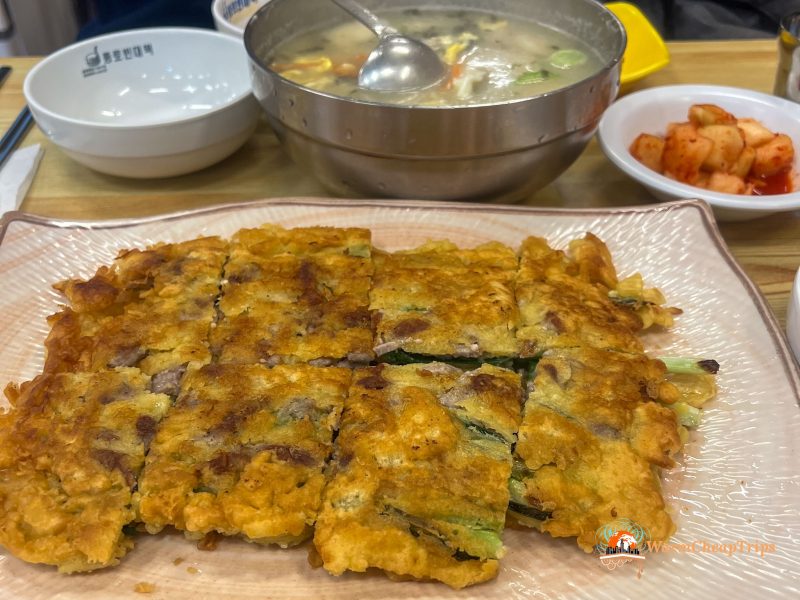
Korean pancakes
The family of Korean pancakes is very varied: pajeon, bindaetteok, yachaejeon, chijimi… the difference lies in the batter and ingredients used, but the basic concept is the same: a savory pancake that you cut with scissors and eat by dipping it into a dedicated sauce.
You will often find them both in restaurants as a side dish and at street food stalls.
DON’T FORGET:
→ Travel insurance: HeyMondo 5% OFF
→ eSIM Airalo: 3$ OFF on your first SIM with the code MICHEL5108
or 10% off with the code AIRALOESIM10 if already a client
Korean Street Food
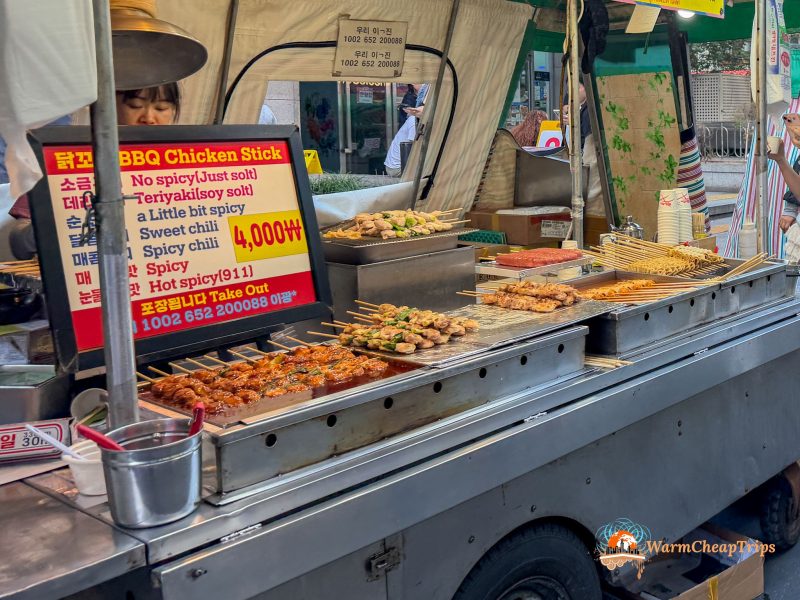
Korean street food is cheap, satisfying, and everywhere: while walking around, you will often come across food stalls, generally specializing in a single type of food, probably fried.
Visiting a market is also an absolute must on a trip to Korea, and in Seoul I recommend avoiding markets such as Gwangjang Market and Myeongdong Night Market, which are rather touristy and have inflated prices. Instead, opt for Mangwon Market, which is much more popular with locals, with fair prices and excellent quality.
At this market, you can also join a food tour and discover even more about the local food culture.
Another place to immerse yourself in the local street food culture is Pocha Street in Jongno-3ga, where you will find yatai just like in Fukuoka, although here they are called pocha.
If you want an authentic experience, surrounded by locals, you have to come here and have dinner at these street-side stools and tables, which in winter are covered with plastic tents to protect diners from the freezing temperatures outside.
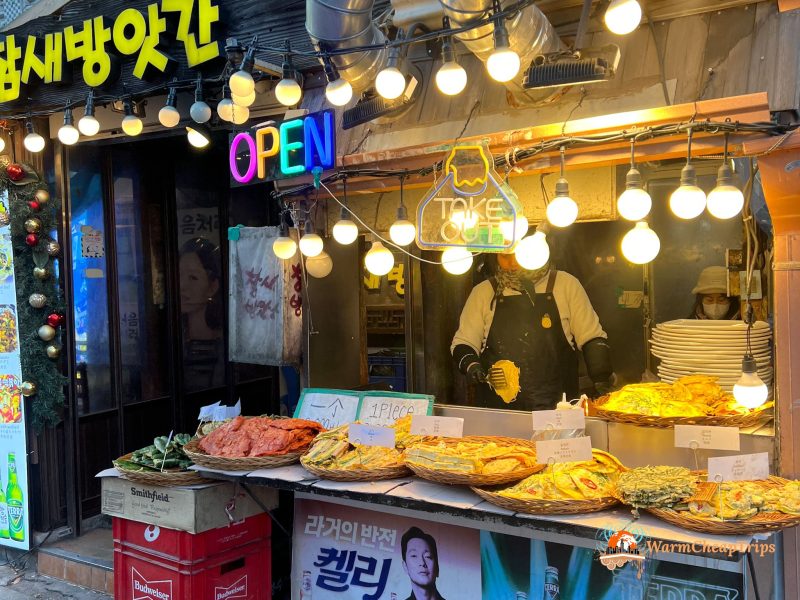
Among the iconic street foods, I recommend:
- Kimbap: The “Korean sushi” (but whatever you do, don’t let a Korean hear you call it that), namely a roll of rice seasoned with sesame oil, wrapped in nori seaweed and filled with cooked or pickled ingredients.
- Tteokbokki: Rice cakes in a spicy sauce, the iconic symbol of Korean street food. Sweet and spicy, with a slightly chewy texture.
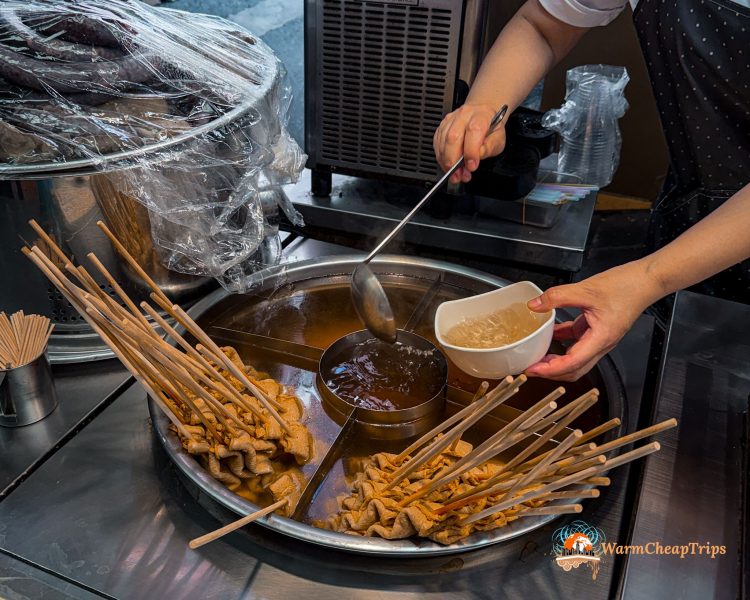
- Odeng: Skewers of fish cake cooked in hot broth. You pay per skewer, while the broth can be drunk for free from the bowl next to it.
- Dakgangjeong: Crispy, glazed fried chicken, available in many variations ranging from spicy to cheese, including fruity glazes.
- Hotteok: A sort of pancake filled with brown sugar, cinnamon and nuts, crispy and fried on the outside and almost liquid inside.
Tea Houses and Cafés
On one hand, we have restaurants and street food at very reasonable prices; on the other, there are cafés and tea houses where drinks cost about the same as in other countries, often making them more expensive than lunch or dinner!
Koreans have a highly developed coffee culture, and aesthetically beautiful and very unusual cafés are practically everywhere.
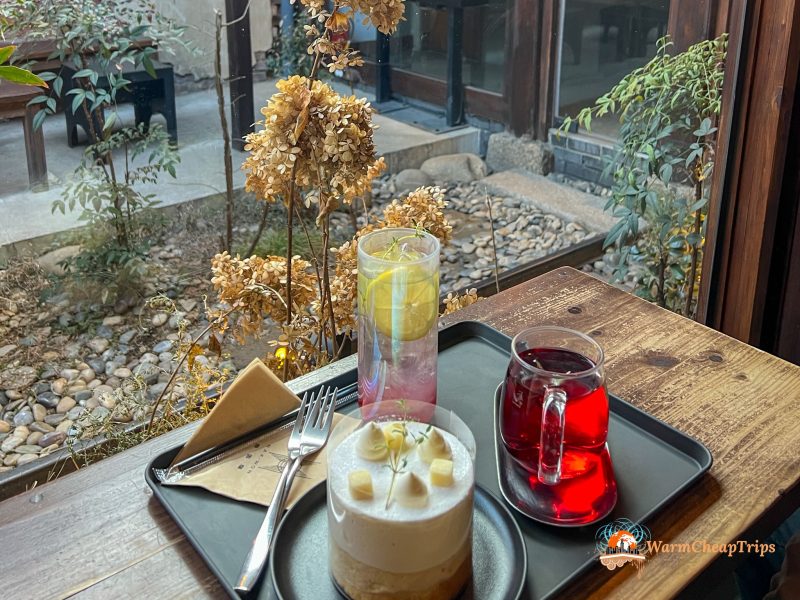
Tea houses, meanwhile, are often real hidden gems, whether they are in hanok buildings that incorporate traditional elements or modern buildings with a concept often centered around nature and relaxation.
Taking a break and sipping an omija-cha accompanied by traditional sweets is an experience you should not miss on a trip to Korea.
Here is a list of cafés and tea houses that I personally visited and would absolutely recommend:
Meoureum – a lovely traditional tea house in a hanok in Insadong, where an elderly couple serves tea and traditional sweets. A wonderfully traditional atmosphere and a truly delicious omija-cha.
Sinyet (Shin Tea House) – also in Insadong, practically across the street at the end of a narrow, almost hidden alley, this wonderful tea room feels like an indoor hanok garden. Mismatched tables and chairs, a stone pathway, plants and lots of wood create a relaxing atmosphere while you sip one of the many medicinal teas available, served, of course, in cups that are themselves worth admiring!
Nakwon – another hanok converted into a café, this one in the hanok neighborhood of Ikseon-dong, famous for its courtyard railway tracks and desserts that travel around on a conveyor belt. Quite well known, so it is generally crowded too.
Tea Therapy – if you love tea and are fascinated by the properties of herbs and infusions, this place is a real paradise, with an incredible selection of teas and herbal infusions and even a quick quiz to discover which type of tea is best suited to you.
Each infusion has health benefits associated with specific needs, and around lunchtime it is also possible to request a more detailed consultation and purchase a personalized blend based on your individual needs.
So, even though Korean cuisine isn’t exactly my favorite, I wanted to put together this article featuring the dishes and experiences I enjoyed the most, because I believe that even when a cuisine doesn’t perfectly match our tastes, the best way to get to know it is to try it, browse the markets, step into restaurants frequented by locals and let yourself be guided by the culture of the place.
Did you find this article useful? Buy me a coffee 🙂
