


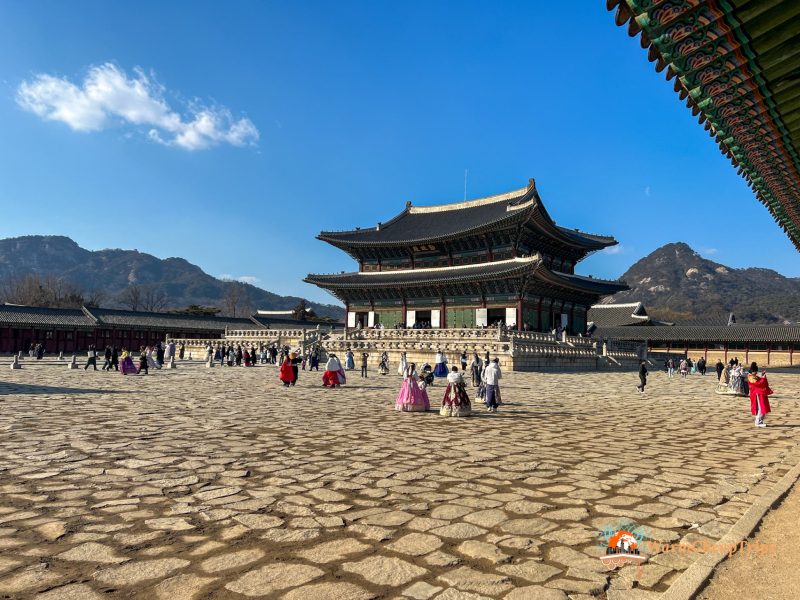
Seoul is the capital of South Korea and, of course, an essential stop on any itinerary in the country. A city that has evolved tremendously in recent decades, transforming into a modern metropolis, home of K-pop and the latest beauty trends. But Seoul is also made of historic sites (yes… sometimes turned into photo sets, but fine), retro cafés loved by locals, and lots and lots of contradictions.
Unlike my usual posts on things to see in a city, this article won’t be too complete or detailed — mostly because Seoul and I didn’t exactly click (so forgive me if the level of enthusiasm isn’t my usual!). Despite this, I have been to Seoul twice: the first time at the end of February 2025, combined with a trip to Andong, and the second time in September 2026. In February, the harsh temperatures meant we needed more stops to warm up and take a break, while in September we were traveling with my husband’s grandmother, so the itinerary was quite relaxed the second time as well.
What to see and do in Seoul
You could easily spend an entire week in Seoul, even using it as a base for day trips to places like Suwon or the DMZ. But generally, in a South Korea itinerary, travelers spend 3–4 days in the capital — just like we did. We actually spent 3 and a half full days when we arrived, plus another half-day with an overnight stay in a traditional hanok after visiting Andong, before returning to Japan. Since it was winter, we couldn’t visit everything I had planned — but in a different season, four days in Seoul are perfect, including the half-day excursion to the border with North Korea.
The first time, we spent three and a half full days in Seoul upon arrival, plus another half day with an overnight stay in a traditional hanok after visiting Andong before returning to Japan. On our second trip, we spent three full days (including a visit to Suwon) plus the half day on arrival.
I can therefore say that four days in Seoul are perfect, even including the excursion to the border with North Korea, which generally takes half a day.
The following itinerary is based on our first trip and is mainly intended to give you an idea of how to divide the different areas to make the most of your time.
DON’T FORGET:
→ Travel insurance: HeyMondo 5% OFF
→ eSIM Airalo: 3$ OFF on your first SIM with the code MICHEL5108
or 10% off with the code AIRALOESIM10 if already a client
Day 1 — Insadong & Ikseondong
It takes just over an hour to reach central Seoul from Incheon Airport even by the regular subway (which costs a quarter of what the recommended AREX express train does — and only takes about 10 minutes longer!).
After dropping off luggage at the hotel, we start familiarizing ourselves with the city by strolling through nearby Insadong and Ikseondong, where tradition meets modernity: artisan shops, tea houses, clothing boutiques, and traditional hanok converted into trendy stores. Locals and tourists blend together, and cafés and tea houses mix traditional Korean elements with Instagram-friendly décors.
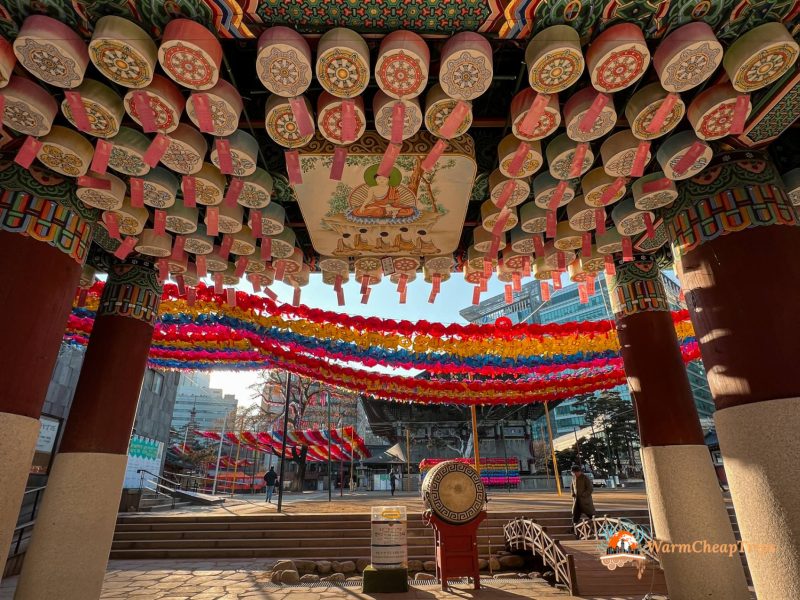
Here you’ll also find Jogyesa Temple and its colorful lanterns. You can join temple activities and enter the restricted area for worshippers — at night the temple is illuminated and very atmospheric.
During our second trip, it was actually in Insadong that we had one of the experiences I enjoyed the most: attending a performance featuring traditional Korean instruments! Jiyeon is a one-hour show inspired by traditional Joseon court entertainment, but it also includes moments featuring modern and international songs performed on traditional instruments. I absolutely loved it! You can book it through GetYourGuide, and by entering the code WARMCHEAPTRIPS5, you’ll get 5% off.
On the edge of Ikseondong lies Jongmyo Shrine, a UNESCO World Heritage site. It can be visited for free with a guide, allowing you to better understand this shrine dedicated to Korean kings. Unfortunately, we visited on a Saturday, when guided tours are only in Korean. On other days, English tours run at 10:00, 12:00, 14:00, and 16:00. It costs 1,000 won, is open 9:00–16:30 (17:30 in summer), and lasts about 1 hour.
The plan was then to head up to N-Seoul Tower, but cold and travel fatigue won — so we ended the evening in a tiny local spot in the Jongno-3ga area, where we had dinner for very little and the best chijimi of the whole trip!
Day 2 — Seoul’s Imperial Palaces
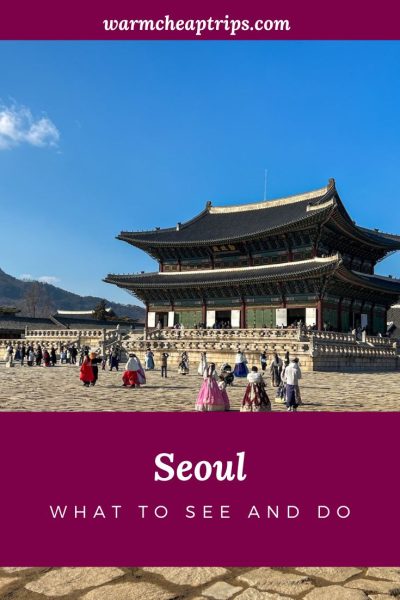
If you wear the hanbok, Korea’s traditional attire, you get free entry to Seoul’s Royal Palaces — so despite the cold, we dedicated this day to history and rented hanbok for the entire day.
Luckily, the palaces are all close to each other — reachable on foot or by a short, cheap Uber ride.
All royal palaces also offer free guided tours in English at set times. We joined them at both the largest and most famous Gyeongbokgung, and the beautiful Changdeokgung (a UNESCO site). Since it was winter, we skipped the Secret Garden (paid entry even with hanbok and only accessible by tour booking), and instead visited Changgyeonggung.
We rented hanbok from Klook and I recommend to go early in the morning for the widest choice of colors and patterns. If you want to visit all the palaces for free, opt for an all-day rental. Otherwise, if you just want to take a few photos, two hours are enough (especially on a hot, sunny day!).
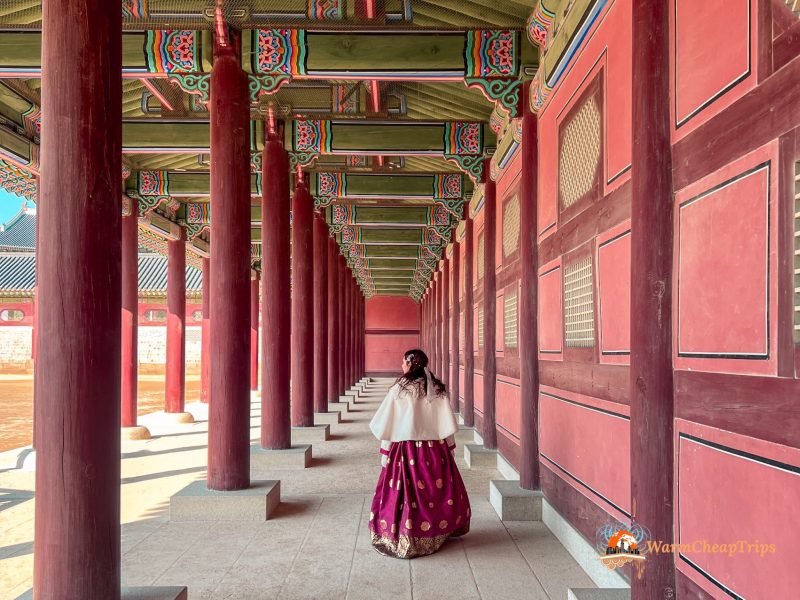
Undoubtedly, Gyeongbokgung is the biggest and most crowded one, with the famous red columns — probably the most photographed background for hanbok pictures. It’s really large, so much so that even with the guided tour you only get to see a part of it! Plan at least a couple of hours even without the guided tour, but personally I recommend joining it because you’ll learn a ton about Korean history and you’ll be given a lot of information about the details and the architecture of the palaces.
Entrance to Gyeongbokgung costs 3,000 won (free if you’re wearing a hanbok) and it’s open from 9:00 to 17:00. I’ll also note that at 10:00 and 14:00 you can watch the guard changing ceremony at the main gate.
The English guided tours are at 11:00, 13:30 and 15:30 and last 90 minutes.
My favorite, however, is Changdeokgung, where we joined another guided tour — this time in Japanese because it fit our schedule better — and our lovely guide kept wanting to take photos of us because we were the only couple in hanbok on the tour, and she was thrilled about it!!
I especially liked the final part of the tour, maybe because it’s less colorful but very elegant, with lots of wood and traditional architectural elements.
The Secret Garden is also located here, and it can only be visited as part of a guided tour, with departures at set times, at an additional cost of 5,000 won. Places are limited and tend to sell out quickly, so it is best to book in advance through this website. If there are no more spots available for the English tour, you can select any other language, join the tour, and then explore the garden freely! We visited it in September and, honestly, it was nice, but even if you skip it, you’re not really missing out on anything major…
Entrance to Changdeokgung costs 3,000 won (free if you’re wearing hanbok) and it’s open from 9:00 to 16:00.
English guided tours are at 10:15 and 13:15 and last 90 minutes.
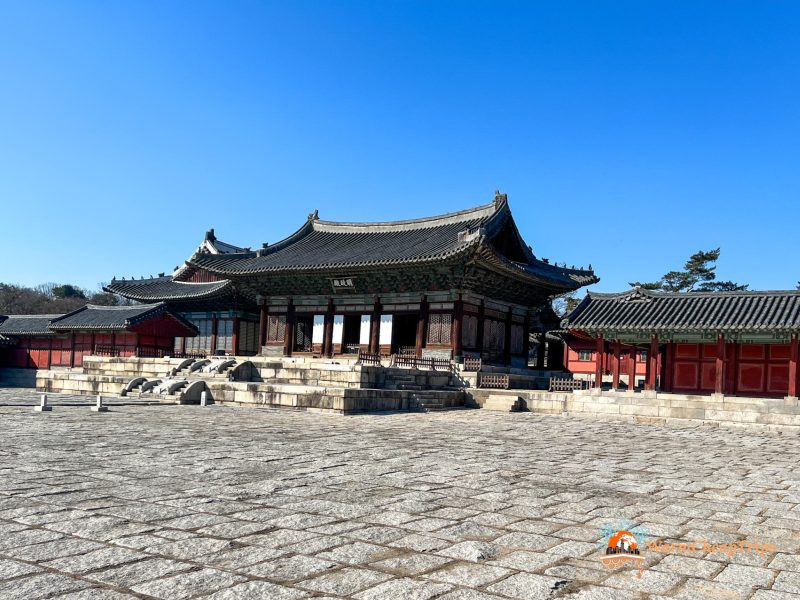
Changdeokgung and the entrance to the Secret Garden are also connected to Changgyeonggung, the Imperial Palace built for King Seongjong’s grandmother, mother, and aunt. This is the one where we definitely found the fewest people, and where we missed the guided tour by just a few minutes, so we didn’t join it!
We still took the chance to snap some nice photos without other people in the frame. At this palace, during certain times of the year, it’s possible to enter for free in the evening during special night illuminations — I recommend checking the official website.
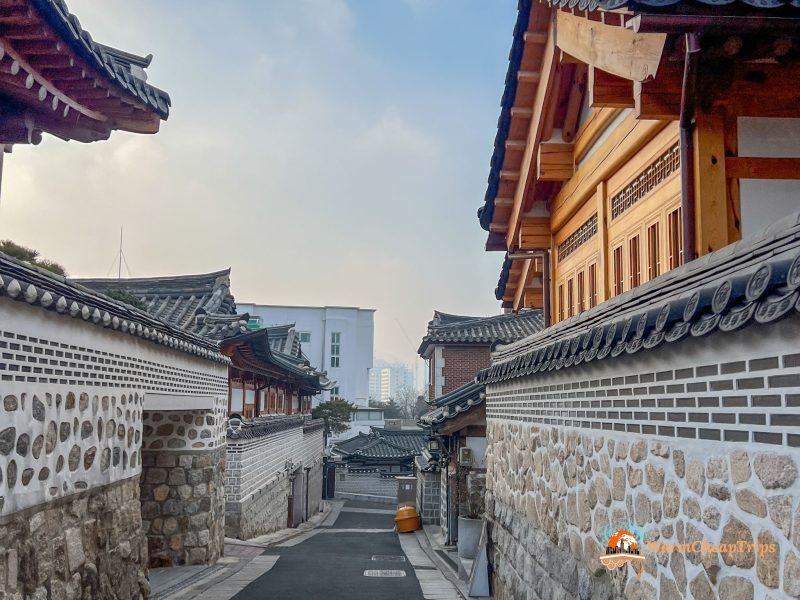
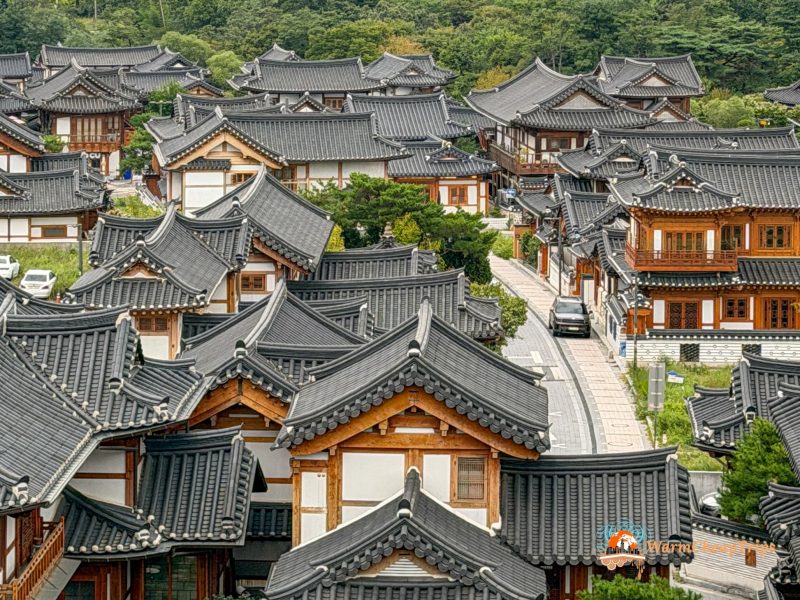
Between the two royal complexes, you’ll also find Bukchon Hanok Village, a residential area where tourists are only allowed between 10:00 and 17:00. It is made up of numerous traditional houses, some of which are also available for overnight stays.
The area is definitely very photogenic, but also always very crowded. Alternatively, I recommend heading to Seochon Hanok Village, on the other side of Gyeongbokgung, or, even better, to Eunpyeong Hanok Village, about 30 minutes away by Uber. This village of newly built hanok (shinhanok) is practically deserted, especially on weekdays, allowing you to stroll peacefully through the narrow lanes between the hanok without the crowds.
I also recommend the small museum, which explains both the structure of traditional hanok and the concept behind this village, which was started in 2010. Here, traditional hanok elements meet modern needs and the use of sustainable materials, creating a way of living in harmony with nature, just as these traditional houses were originally designed for.
Day 3 — Seodaemun Prison, War Memorial of Korea, & Hongdae
After the day dedicated to the imperial palaces and Korea’s ancient history, the journey continues with Korea’s more modern history, visiting Seodaemun Prison, used mainly by the Japanese during the occupation. Honestly, I didn’t really like the very propagandistic narrative aimed solely at fueling hatred towards Japan. Of course, the Japanese occupation period was terrible for many Koreans fighting for independence, and the Japanese certainly didn’t go easy with their punitive treatments, but I believe history should be told impartially, narrating events objectively and free from any biased judgment for one side or the other. An example of a prison where incredible tortures also occurred, but where I found a less politicized narrative, was Hoa Lo Prison in Hanoi—a sign that things can be done differently, without diminishing the terrible things that happened.
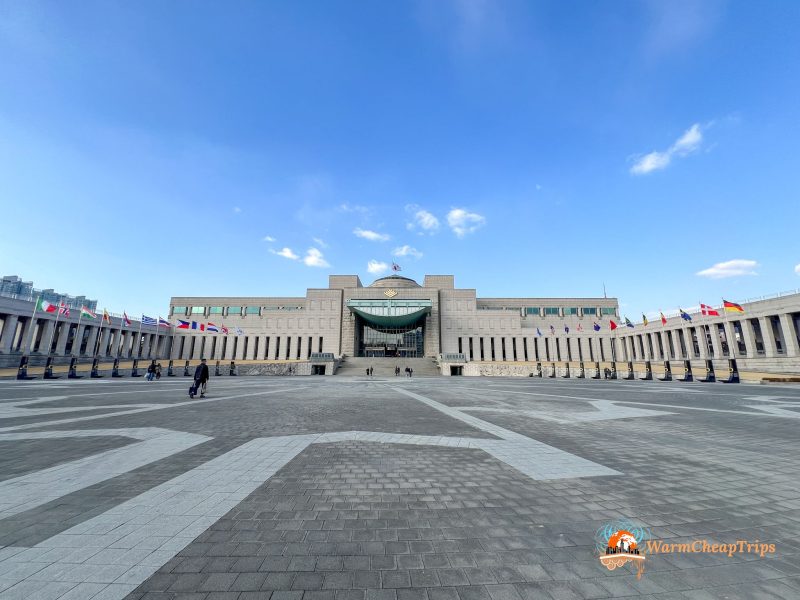
Another essential stop to learn about and delve deeper into Korea’s history is the War Memorial of Korea, a museum that traces the history of Korea’s wars from the Three Kingdoms period, to the Japanese occupation, all the way to the Korean War. If you love history like I do, you’ll spend at least a couple of hours here reading the various in-depth explanatory panels, which, here too, are quite politicized.
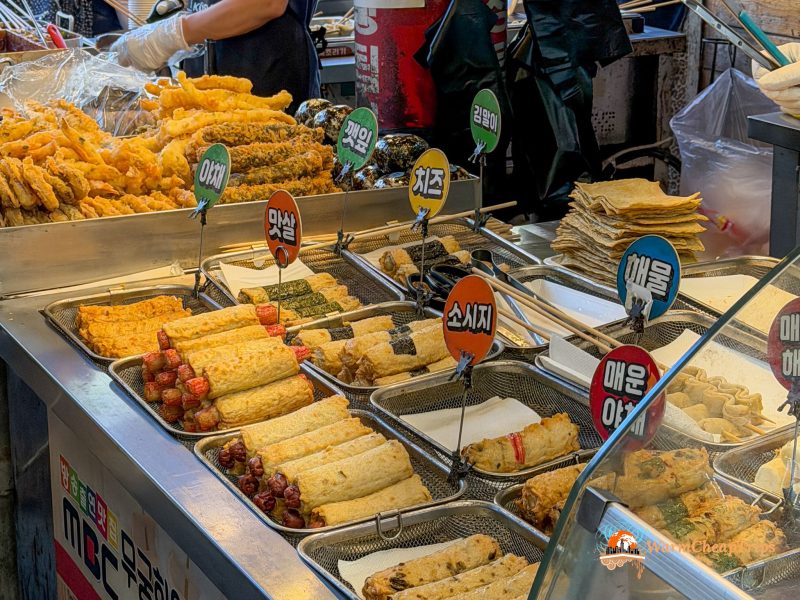
After such an intense first part of the day, I recommend “taking it easy” with some street food at one of Seoul’s famous markets. Taking it easy in a figurative sense, because with all the spicy and fried food, it’s not exactly light! LOL.
Anyway, we opted for Mangwan Market, which is definitely less touristy and mainly frequented by locals who come here to buy fish, spices, kimchi, and all sorts of other ingredients. There are also plenty of street food stalls where you can enjoy delicious tteokbokki, the famous bite-sized pieces of fried chicken, handmade dumplings and noodles, and of course the iconic hotteok! Very reasonable prices and excellent quality, unlike Gwangjang and Myeongdong Market, which I’ve read about everywhere as being tourist traps.
Hongdae, the young and lively district, full of clothing and cosmetics shops, street food stalls, and restaurants. Personally, I really enjoyed this area. I found it to be a perfect representation of young, modern Korea, very authentic and not overly touristy, unlike Myeongdong, which seems to be much more touristy, with inflated prices and even some scams!
Day 4 — Day Trip
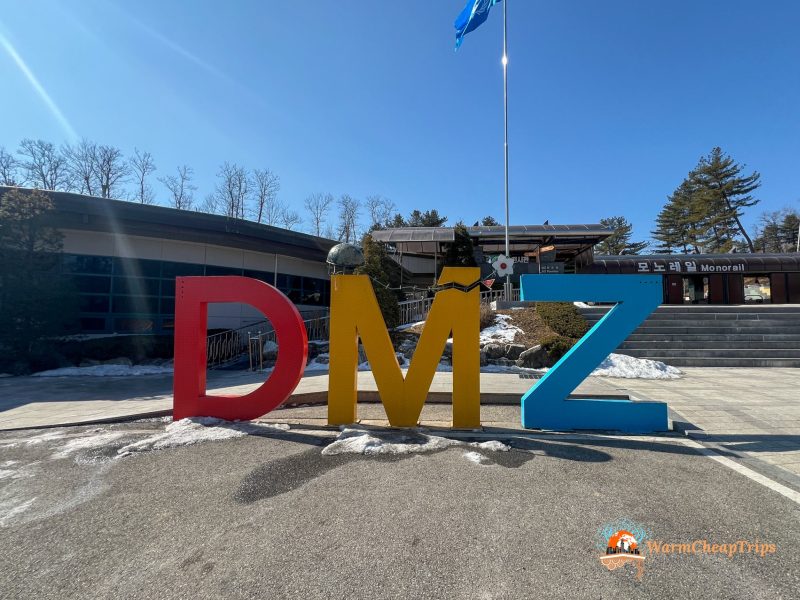
DMZ – Delimitarized Zone
It’s possible to take several day trips from Seoul, and among them all, the most unique one—which I personally urge you to take—is the visit to the DMZ, the demilitarized zone between the two Koreas. This area can only be visited accompanied by an authorized guide, and you will need to present your passport for security checks. The excursion starts early in the morning, there are specific schedules, and there is always the uncertainty that the tour might be interrupted or that some areas could become inaccessible.
We opted for the half-day tour purchased through Get Your Guide, but there are also full-day tours that include a visit to a suspension bridge or a boat ride. By the way, by downloading the app and entering the code WARMCHEAPTRIPS5, you’ll get a 5% discount.
The tour itineraries are generally always the same; the times or the order might vary, and unfortunately, some tours are more focused on shopping than on explanations. I chose this tour after researching various agencies and reading many reviews, and I am satisfied with the one I picked. Needless to say, the guide makes a huge difference: Julie was fantastic and explained the history to us in an impartial and non-propagandistic way, while still being very detailed and thorough.
I will talk more about the DMZ excursion from Seoul in a dedicated article.
The excursion takes half a day, and in the afternoon/evening you could “cross the river” to explore the wealthy Gangnam district, home to K-Star Road and its statues of Korean idols, the enormous Gangnam Style hands, and the Starfield Library inside the huge COEX shopping complex.
In the area, I also recommend Bongeunsa Temple, which I hope to have the chance to visit on a future trip.
Suwon
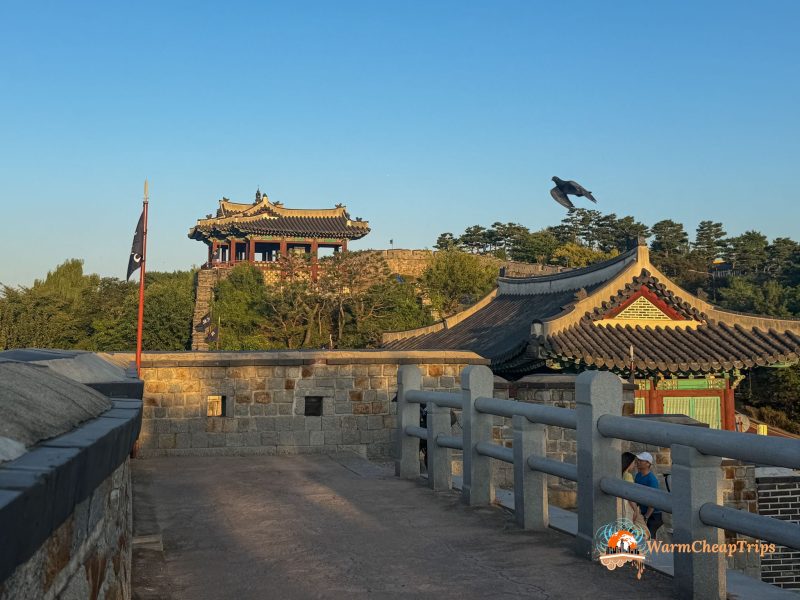
Another interesting day trip from Seoul is the city of Suwon. The main reason to come here is Hwaseong Fortress, a UNESCO World Heritage Site, a nearly 6-kilometre-long defensive wall built at the end of the 18th century by order of King Jeongjo of the Joseon Dynasty. You can walk along the walls for a good part of the route and also visit the Temporary Palace inside the fortress, which was recently reconstructed after being destroyed during the Japanese occupation.
The full route takes around 3 hours on foot. If you are traveling with someone who has difficulty walking, there is also a small tourist train that follows the main circuit without too much effort, but apparently it is very popular and needs to be booked in advance through this website, which is only available in Korean.
We visited Suwon on our second trip to Seoul, and I have to admit that we had a bit of trouble both finding taxis to get to the fortress area and figuring out which highlights to visit if you don’t intend to walk the entire length of the walls. After a few moments of frustration, the information office gave us some useful tips, recommending the area between Hwahongmun Gate and Janganmun Gate, on the opposite side from Paldalmun Gate, which is the one you will encounter when arriving in the area. The walk here is pleasant both along the walls and outside them, through a lovely park. If you want to take the tourist train or go on a ride in the hot-air balloon (!), you will need to head to Yeonmudae, the point furthest from the palace, where you’ll find the ticket office and where you can watch various performances during the day.
You can visit Suwon independently, but since I found it somewhat difficult to find clear and up-to-date information, it might have been better to book a tour with transportation included and a visit to the Starfield Library, which is also located in Suwon.
Where to Stay in Seoul
Myeongdong is often the most recommended area to stay in Seoul, but after digging a little deeper, I realized it wasn’t the right solution for my needs, as it’s heavily focused on nightlife, shopping, and, above all, very touristy. After consulting with friends who had been to Seoul several times, the choice fell on the Jongno 3-ga neighborhood, which is well-connected by public transport and from where you can also walk to the Imperial Palaces and the Insadong and Ikseondong areas.
We stayed at the Amare Hotel Jongo, which, incidentally, several followers on Instagram later wrote to tell me was also their choice in Seoul. A very large room, with a beautiful modern bathroom, spacious shower, bathtub, and excellent amenities. Very large and soft bed, breakfast included (though not very varied), 475,000 won for 3 nights.
I would have liked to stay at the same hotel the second time around, but apparently they don’t have triple rooms, so we opted for the Somerset Palace Seoul, which is in a slightly higher price range but absolutely recommended! The family room has two double beds, a washing machine, a small fully equipped kitchen, and a Nespresso machine. The property also has a swimming pool, gym, and children’s area. The location is excellent too, just a short walk from Gyeongbokgung and Insadong, with plenty of little shops and restaurants nearby. We paid 890,000 won for 3 nights with breakfast for three people.
However, I also recommend trying one night in a traditional hanok in Bukchon Hanok Village, which is in the same area as the Imperial Palaces. This way, you can enjoy the beauty of the hanok village in the evening and early morning, when tourist access is supposedly restricted!
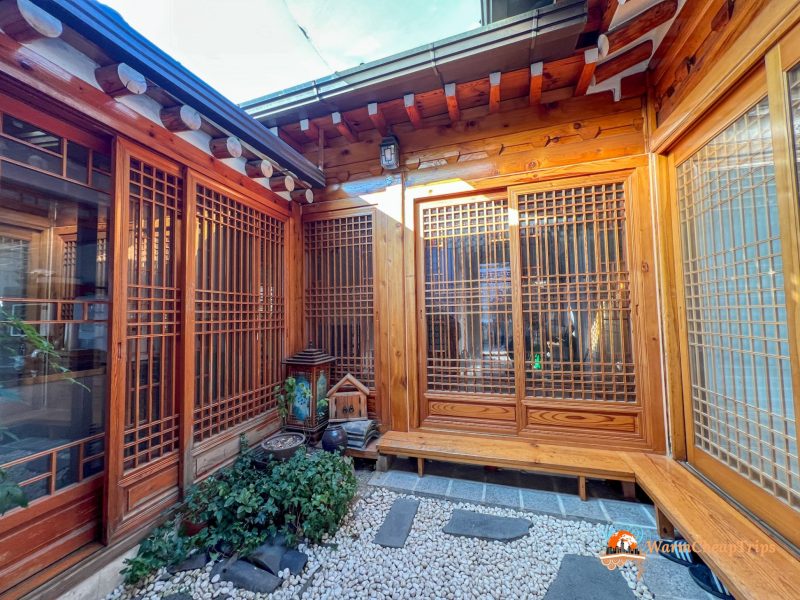
Hanok are traditional Korean houses, made of wood and designed according to Feng Shui principles, creating harmony between the interior and exterior. They are simple dwellings where you sleep on the floor, on the pavement heated by the traditional Korean system called ondol. Generally, there is a small garden/internal courtyard, around which the rooms are arranged—usually simple, sparse, and often with a shared bathroom, featuring the typical heated floor.
We spent our last night at Bukchonae, for 130,000 won without breakfast. The room is tiny, with just enough space for the futons, a small table, room for luggage, and a small private bathroom (which is not a given in hanoks). I must say, with the underfloor heating, sleeping on the floor was fantastic, although a bit harder than the typical tatami rooms in Japan. Upon entering, there is a small internal courtyard, and shoes must be left out here in the external shoe rack—so they are quite cold in the morning! Nonetheless, the atmosphere is lovely, and there is a communal kitchen available.
Where to Eat in Seoul
Food is undoubtedly an important part of a trip to Korea, especially in Seoul, where the sheer quantity of stimuli and available venues is enormous. Unfortunately, having visited Seoul in winter, I didn’t get to fully appreciate the street food in Hongdae, nor the stalls that pop up in the evening on many of Seoul’s streets.
Furthermore, you know I’m not the best person for culinary recommendations, as I generally choose where to eat almost at random, depending on where I am and the menus that inspire me at that moment. However, having found some real gems, I wanted to share them with you.
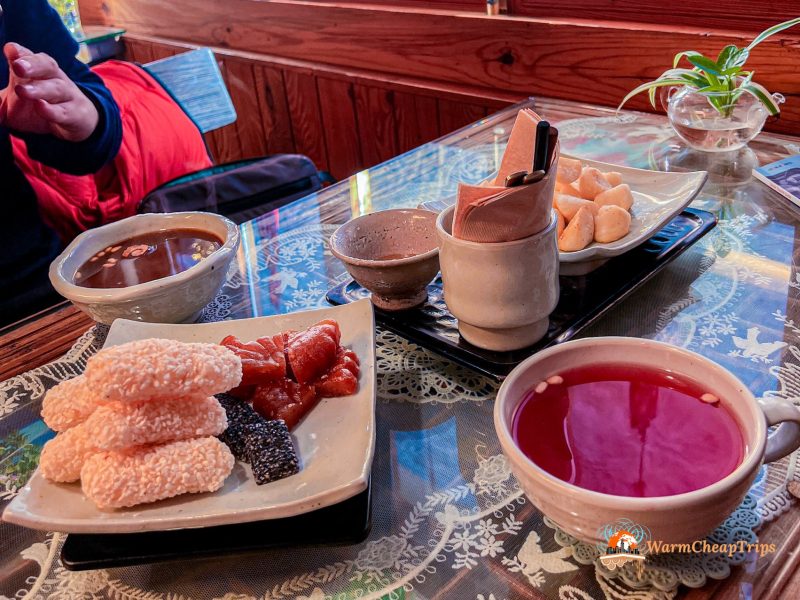
Meoureum – A delightful traditional tea house in an Insadong hanok, where an elderly couple serves tea and traditional sweets. A super traditional atmosphere and a truly delicious omijacha.
Nakwon – Another hanok converted into a café, this one in the Ikseon-dong hanok district, famous for its “tracks” in the inner courtyard and for the desserts that rotate on a conveyor belt. It’s quite well-known and therefore usually crowded.
Gaesong Traditional Dumpling House – Staying in the Insadong area, this restaurant is listed in the Michelin guide as a Bib Gourmand. You can’t make reservations; you have to queue (or, like us, get lucky and find a spot for dinner by going early). It’s a place that makes traditional dumplings from Kaesong, the North Korean town closest to the border. This is because the “nonnina” (grandmother) who opened the restaurant arrived from that city in 1970. The dumplings are huge and delicious; I suggest ordering the mixed plate.
Jungdamun Bukchon – This restaurant is actually beloved by the Japanese (so much so that the staff also spoke Japanese) and specializes in bossam, boiled pork that is eaten wrapped in lettuce leaves. Located in a converted hanok in Bukchon village, it’s an elegant and clean establishment, but be prepared for a bit of a wait.
As mentioned, I didn’t get to see everything I wanted to in Seoul, and this article isn’t complete, as there are many other things to visit in South Korea’s capital. I will most likely have the chance to return to Seoul again and will update the article then. In the meantime, leave me a comment with the things you think are must-sees!
Did you find this article useful? Buy me a coffee 🙂
Update in September 2026
