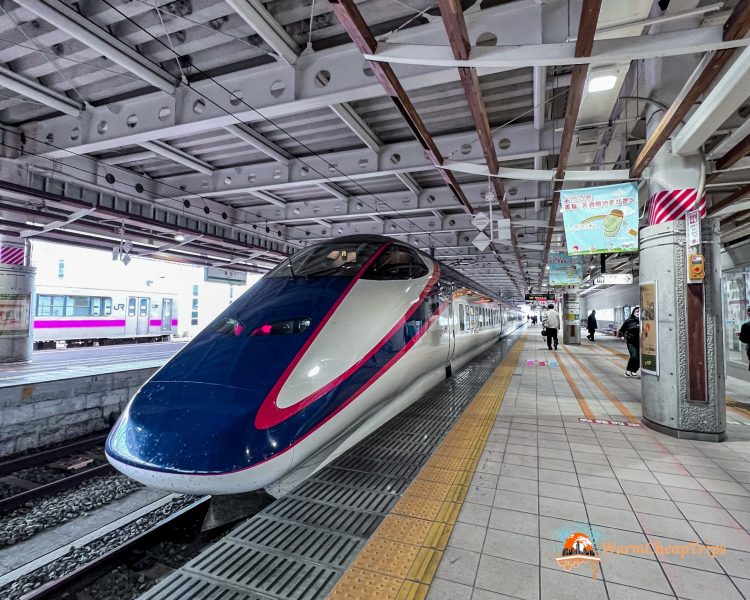
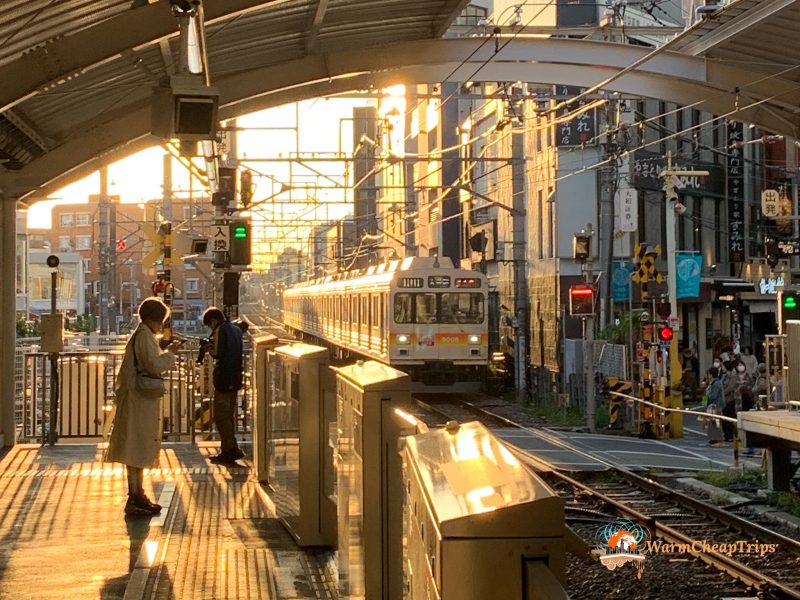
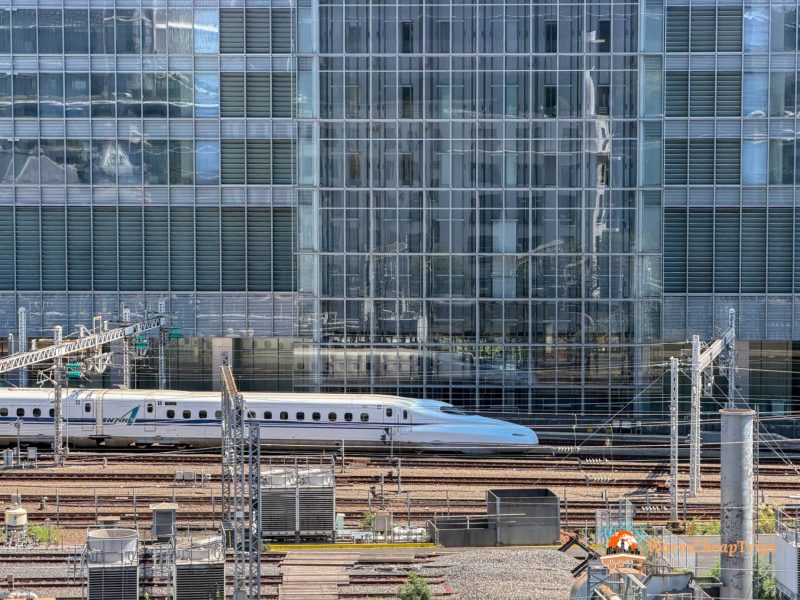
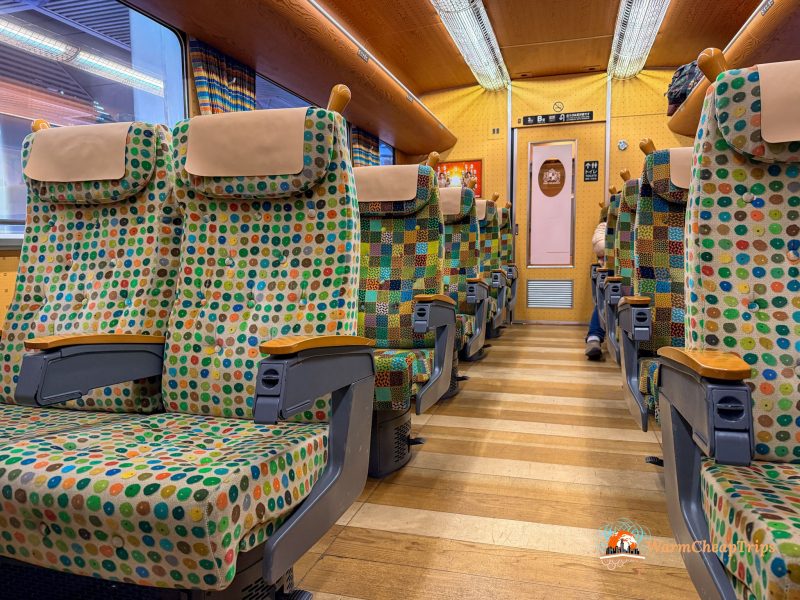
One of the questions I get asked most often is whether it is worth getting the JR Pass.
The JR Pass is a tourist pass that, for a fixed price, allows unlimited travel on JR trains, including Shinkansen, within a specific period of 7, 14 or 21 days. Once an absolutely convenient choice that could save you quite a bit of money, it is still often mentioned today as a must-have for a trip to Japan, but in reality, that’s not quite the case. In fact, after the substantial price increases following the pandemic, the JR Pass is rarely the most convenient option.
Unfortunately, there are still many people (and agencies!) who, when asked “Do I need to buy the JR Pass for my trip to Japan?”, answer “Yes, absolutely”, but the reality is that it depends on your itinerary and the answer is almost always no.
In this article I’ll explain everything properly and suggest alternative passes to consider depending on the stops on your itinerary. And of course, you can always request a consultation from me and we’ll look together at the best options for your specific trip.
Japan has one of the most efficient and extensive railway networks in the world, and although the most famous railway company is JR (Japan Railways), which operates the incredibly fast Shinkansen, there are dozens of other railway companies, each with their own tickets and rules.
There are also different types of trains — Shinkansen, Limited Express, Rapid and Local — and each uses different types of tickets, but I’ll talk about that in a dedicated post coming soon. In this article, I’m focusing exclusively on passes and how to choose the right one for you (if there is one).
The JR Pass: what it is and when it is (or isn’t) worth it
The Japan Rail Pass is an unlimited pass for the JR network, available for 7, 14 or 21 days, purchasable only by people entering the country as tourists, and covering almost all JR transportation: ferries, buses and trains, including Shinkansen — with the exception of the Nozomi and Mizuho, the fastest and most frequent trains on the Tokaido (Tokyo-Osaka) and Sanyo (Osaka-Hakata) lines.
For many years, the JR Pass was essential for almost any trip to Japan involving several cities, thanks to its very competitive price compared with individual tickets. Then, in October 2023, prices increased by around 70%, and things changed dramatically. In reality, when looking at the price in euros, the JR Pass after the 2023 increase and the price I paid in 2014 are almost equivalent, but that’s because over these 10 years the value of the yen has almost halved…..
However, the prices of individual train journeys have remained more or less unchanged, so it is now often more convenient to simply buy individual tickets rather than a pass that also comes with time restrictions and only allows certain Shinkansen services with less frequent departures. The Nozomi, for example, leaves Tokyo every 5–10 minutes, while the Hikari and Kodama included in the pass run every half hour or more, make more stops and therefore take longer to cover the same route.
As of August 2026, the prices of the standard JR Pass are:
7 days:¥50,000 (~€270)
14 days: ¥80,000 (~€440)
21 days: ¥100,000 (~€540)
And in October 2026, they will increase again by around €20! There is also a pass for the Green Car, essentially first class with even more spacious seats, but the price increases by at least~€100 for the 7-day pass.
Just to give you an idea of prices, Tokyo-Kyoto costs around €75, Tokyo-Kanazawa around €80 and Osaka-Hiroshima around €65.
So, for a classic Japan itinerary such as Tokyo-Kyoto/Osaka-Hiroshima or Tokyo-Kanazawa-Kyoto/Osaka, the pass will hardly be worthwhile, unless you plan to squeeze everything into 7 days and return to Tokyo in the meantime… honestly, that’s a travel style that doesn’t really allow you to enjoy the journey, but only to tick off cities so you can say you’ve been there.
In short, the JR Pass isn’t worth it if:
your itinerary is focused on a single region (only Kansai, only Kyushu, only Tokyo and surrounding areas)
you have around 10 days but don’t travel much between major cities
you’re doing a classic itinerary and arriving in Tokyo and departing from Osaka (or vice versa)
you want to take the Nozomi (not covered by the pass, and the most convenient and frequent trains on the Tokyo-Osaka-Hiroshima route)
you’re travelling slowly, with long stays in just a few places
In these cases, a combination of individual tickets + regional passes (I’ll explain what these are below) will almost always cost less than the JR Pass.
In other cases, however, the pass may be worthwhile. You can easily check this yourself by using Google Maps for the routes you are planning and adding up the fares shown. (Google Maps prices can sometimes be slightly different because it may indicate Nozomi services or different carriages, but the difference is generally only a few euros.)
Where to buy the JR Pass
The JR Pass must be purchased before departure and can easily be bought online. Klook often has special offers and cashback, but if you purchase it from the official website, you can also reserve seats on the website starting 30 days before your travel date, without having to wait until you are in Japan to exchange the voucher for the actual pass and then reserve your seats at ticket machines or JR offices.
The JR Pass can be purchased up to 3 months before the activation date, which can also be later than your arrival in Japan or the date on which you exchange the pass at a JR office.
The alternative to the JR Pass: regional passes
And here comes the main point of this article, the one that is rarely mentioned by travel websites or general travel guides: regional passes.
Unlike the JR Pass, these passes cover only specific areas of Japan, including trains and sometimes other forms of public transport within a particular region, at a price that is often more competitive than buying individual tickets.
There are many regional passes, both JR passes and passes offered by other companies, such as theHakone Freepass from the Odakyu Line, which is essential for visiting Hakone. However, you always need to pay attention to the validity period and price to check whether purchasing one of these passes will actually save you money on your trip.
Below, I’ll list some of the main passes available and tell you which ones I think are a good deal and which ones should be considered more carefully.
One of the more famous passes, often recommended for those travelling Tokyo-Kanazawa-Kyoto/Osaka, because it covers exactly this route, which has become particularly popular in recent years. 35,000 JPY (around €190) for 7 days.
Let’s say that it only really makes sense if you also use it to return to Tokyo, rather than taking the Tokaido Shinkansen, which takes just two to two and a half hours to get you back to Tokyo from Kansai.
It is doable, yes, but 7 days is really the bare minimum and, above all, you end up spending more time on trains instead of out exploring.
This is a pass that can make sense if you’re doing the Kyoto/Osaka – Kanazawa – Takayama route (passing through Shirakawago) and Nagoya, with some stops along the way such as Fukui or Gifu.
It is valid for 5 days and costs 19,800 JPY, practically the same amount you would pay without the pass. You might save a few euros if you also use it on some local JR trains or buses, but on the other hand, reserving a seat on the buses to Shirakawago is quite complicated: you have to call or book at the bus terminals and, because this is a very popular route with few departures, the risk of not finding availability at short notice (i.e. from the moment you collect the pass) is quite high.
JR West is the company offering the most interesting passes, with various combinations of cities and often very good prices. It’s worth browsing through the available options to choose the one that best suits your itinerary.
I’ll mention the passes that I most often recommend to people who request a consultation or itinerary from me, which are the ones that are actually the best value.
Of all of them, the Kansai-Hiroshima Area Passis by far the most convenient pass for anyone visiting Hiroshima and then returning to Kyoto/Osaka (or even Tokyo, although the journey from Kansai to Tokyo would then have to be paid separately).
It costs 17,000 JPY, is valid for 5 days and includes the ferry to Miyajima. Considering that the Osaka-Hiroshima journey alone costs just over 11,000 JPY, you can immediately see how even just a return journey already costs more than the pass!
If you also include stops such as Himeji and Okayama, or even Amanohashidate and Kinosaki Onsen, these are also covered, making this the best pass for saving money during a trip to Japan.
With this pass you can also reach Takamatsu, the gateway to Shikoku, and Tsuruga, from where you can take the Shinkansen to Kanazawa, so it really is a very versatile and convenient pass.
If, on the other hand, you’re not visiting Hiroshima but are travelling to Kanazawa and Okayama, the Kansai-Hokuriku Area Passis an excellent option for making several stops around the region over an entire week, provided that you leave Kyoto until the end, so that you don’t “waste” days of the pass. It costs 19,000 JPY.
Finally, if your itinerary goes all the way down to Kyushu by train, the Sanyo Sann’in Northern Kyushu Pass costs only €15 more than the Sanyo Sann’in Area Pass, which only goes as far as Fukuoka, but additionally includes cities such as Beppu, Kumamoto and Nagasaki.
Definitely a cost-saver if you travel to Kyushu by train from Osaka, making stops along the way.
If, instead, you’re about to embark on a trip around Tohoku, the JR East Pass is an excellent ally, allowing you to save money while travelling around this beautiful region for 5 days. The 35,000 JPY cost of the pass is lower than the price of the individual Tokyo-Sendai-Kakunodate and return journeys.
If you are also heading to Hokkaido, the JR East – South Hokkaido costs €28 more, is valid for 6 days and also includes destinations such as Hakodate, Sapporo and Noboribetsu, although in my opinion, 6 days for all these stops is a little tight.
For Hokkaido, there are also several JR Hokkaido passes, and in my opinion the Sapporo-Noboribetsu Pass is the perfect option if you’re doing a mini itinerary in Hokkaido. It costs practically the same as a return train ticket between Sapporo and Noboribetsu and is valid for 4 days.
Kyushu and Shikoku passes are generally not particularly convenient, because their prices tend to be roughly equivalent to the cost of individual journeys, while the validity period forces you to do everything in a rush… which, in my opinion, is not ideal if you actually want to enjoy your trip.
In addition to JR passes, there are also some local passes offered by other companies that can be very convenient, such as the previously mentioned Hakone Freepassfrom Odakyu, which covers almost all forms of transport (trains, buses, cable cars, pirate ships…) between Shinjuku (or Odawara) and the Hakone area.
There is also the Kintetsu Rail Pass, which offers 5 days of unlimited travel on Kintetsu trains between Nagoya, Kyoto and Osaka, passing through the beautiful and little-visited Mie Prefecture.
If you’re visiting Koyasan, the Koyasan World Heritage Passis a digital pass that includes the transportation needed to reach and get around Mount Koya, and also offers a few discount coupons.
Write down all the planned journeys — city by city, with the dates.
Calculate the cost of individual tickets using Yahoo Transit (or simply Google Maps, although sometimes it shows slightly different prices) — the total gives me the “benchmark” to beat.
Compare it with the passes available for that area — if a regional pass covers at least 70–80% of my journeys and costs less than the sum of the individual tickets, I get it. Otherwise, I buy individual tickets.
This approach can save you even a hundred euros compared with buying the national JR Pass “just to be safe” without actually doing the maths!
And if you want to save even more, you could consider overnight buses, which are quite extensive and, in addition to being cheaper, also allow you to save on accommodation costs.
Tickets for individual journeys
Tickets for individual journeys can be purchased starting 30 days before your travel date. You can buy them directly at the station, either from JR ticket offices or from the dedicated ticket machines found at almost all JR stations (the green ones, clearly marked for Shinkansen), or online through sites such as Klook (which sometimes also offers discounts), SmartEX, which is the same website used by Japanese travellers but with an English version, or through the official regional JR websites such as JR East, JR West and JR Kyushu, which all have online shops (although some sections may only be available in Japanese).
Unlike the machines for local train and metro tickets, Shinkansen ticket machines accept credit card payments.
Final practical tips
Although there are often also trains with unreserved carriages, my advice is to reserve your seat in advance, so you can be sure of having one and won’t have to stand, especially if you have luggage.
Some Shinkansen, such as many of those travelling to Tohoku, don’t have jiyūseki (unreserved carriages), and during certain periods of the year (Obon, Golden Week, New Year), even trains that normally offer them become fully reserved-seat trains.
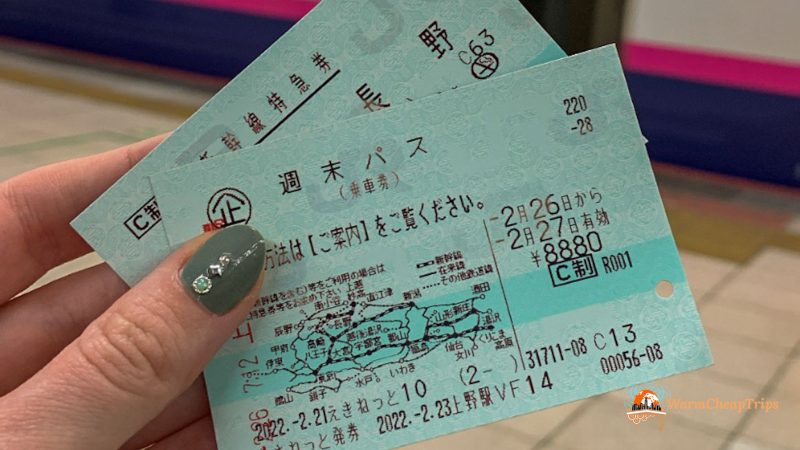
With the JR Pass and most regional passes, tickets are included, but seat reservations are separate and must be made online (if the pass was purchased from the official website), at ticket offices or at the machines.
If you need to change your ticket, you can do so free of charge until BEFORE the train’s departure. If you miss your train, you can take the next one by boarding an unreserved carriage, if available.
Always carry your passport with you: many passes require you to show your passport when activating or purchasing them at ticket offices, because they are only available to foreign visitors travelling on a tourist visa.
Furthermore, under Japanese law, you are required to carry an identification document with you at all times, and for tourists the passport is the only recognised form of ID.
The IC Card (Suica/Pasmo) does not replace passes, but is complementary to them. You can use it for metro, buses and local trains, but it is not valid on Shinkansen (unless you link it to a digital ticket, although I believe for now this option is only available through Japanese-language websites).
Adoro viaggiare. Ma non ho mai abbastanza ferie. E non mi piace spendere. Però appena posso scappo, per scoprire posti nuovi, incontrare nuovi amici, capire nuove culture. Dalla gita fuori porta, alla vacanza all-inclusive, all'itinerario massacrante...perché rinunciare? Ogni occasione è buona per partire!